Parents, are you ready for more peace?
More peace in your family begins with understanding why nervous system regulation is the foundation of behavior.
Our nervous system facilitates the exchange of information between our brain and our body, and its primary job is to use that information to keep us safe.
This is how it works:
We experience our world through sensations.
- Internal sensations: sensations inside our body such as hungry or full, thirsty or not, energized or tired, warm or cold, in pain or comfortable. We might also feel pressure or no pressure, relaxed or tense, light or heavy, or notice our heart beating slowly or quickly.
- External sensations: what we hear, see, smell, taste, touch.
- Relationship sensations: felt signals we experience in response to body language—both our own and that of others. These include tone of voice, facial expressions, posture, movement, and gestures.
This sensory data is sent to our brain which automatically and subconsciously perceives safety or threat based on our past experiences with similar sensations. Steven Porges, PhD, author of The Polyvagal Theory, coined the term“neuroception” to describe this process.
When our brain perceives safety or manageable threat, it activates a state of nervous system regulation and we instinctively respond as our best self.
I define our “best self” as Richard Schwartz, PhD, author of Internal Family Systems, defines “The Self.” When we act as our best self, we display qualities of the 8 Cs and 5 Ps:
- 8 Cs – Confidence, Calmness, Creativity, Clarity, Curiosity, Courage, Compassion, Connectedness
- 5 Ps – Presence, Patience, Perspective, Persistence, Playfulness
When our brain perceives too much threat, it triggers a state of nervous system dysregulation to prepare our body to defend itself and we instinctively react as our defensive self.
Nervous system dysregulation is a deeply rooted survival instinct that has helped humans react quickly to danger since we first evolved.
In modern life, however, nervous system dysregulation is more often triggered by too much stress caused by everyday challenges rather than too much threat caused by physical danger.
When we experience too much stress, it triggers nervous system dysregulation, and our instinct is to react as our defensive self.
FOR EXAMPLE:
When a younger child needs to move their body, but is expected to stay still; doesn’t like the taste of their food, but we’re insisting they finish it; wants our attention, but we’re feeding the baby; is playing with a toy and another child grabs it from them, or must transition from one activity to another when they’re not ready to…
When an older child gets home from school and is on empty; is immersed in a video game, and we ask them to turn it off; is hungry, but dinner isn’t ready yet; is tired but is expected to do their homework; or is stressed because of their test/ performance/game the next day…
As a parent, when our older child starts yelling right after we got the baby to sleep; we feel overwhelmed by constant touch; are trying to work, and they keep interrupting us; they’re late getting ready for school; we ask them to turn off their iPad and they react disrespectfully; or we’re tired and they’re late getting home…
One or, more often, a combination of these everyday challenges can create too much stress and trigger nervous system dysregulation. Our instinct is to react as our defensive self rather than as our best self:
- Fight – lash out with our body or our words
- Flight – withdraw physically
- Freeze – withdraw emotionally
- Fawn – people-please to avoid conflict
And for people—adults and children alike—who are deeply feeling, sensory sensitive, have ADHD, ASD, have experienced trauma, or have other individual differences, they may experience things more intensely, so their nervous system can get dysregulated more easily.
Whereas, we keep our stress in check, it activates nervous system regulation and our instinct is to respond as our best self.
My definition of peace is the ability to remain in a state of nervous system regulation—even when faced with too much stress—so we can respond to everyday challenges as our best self rather than react as our defensive self.
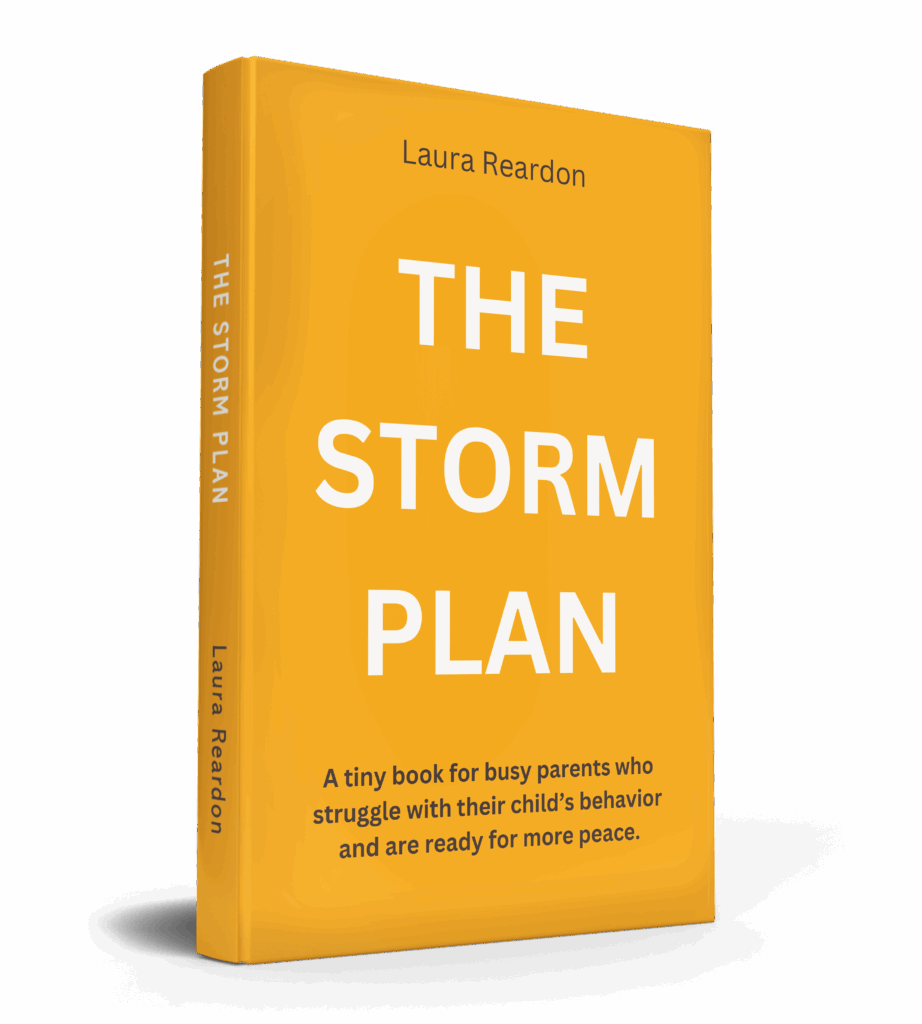
The Storm Plan is a practical, two-part framework designed to help you regulate your unique nervous system and support your children in regulating theirs so you can show up as the parent you aspire to be and bring out the best in each child, creating more peace in your family. The Storm Plan is available on Amazon.